
Committed to Research, Dedicated to Humanity
Indus Hospitals
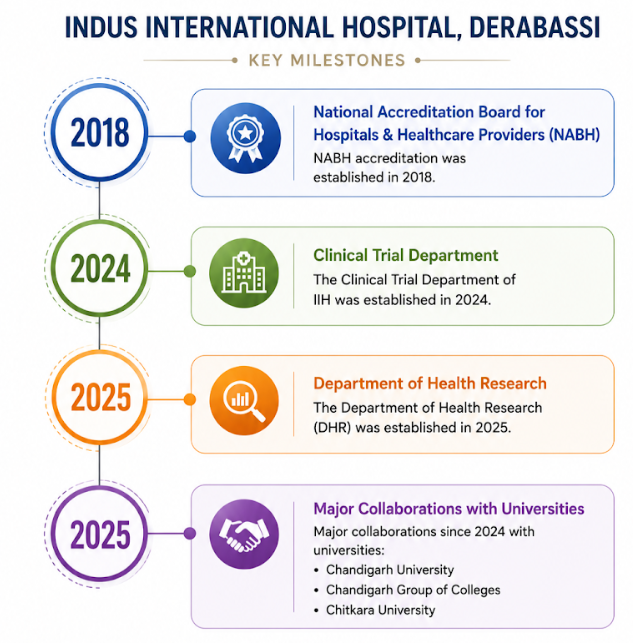
Established in 2024, the Clinical Trials and Research Department at Indus International Hospital, Derabassi is dedicated to advancing medical knowledge, developing innovative therapies, and improving patient care through ethical, high-quality clinical research.
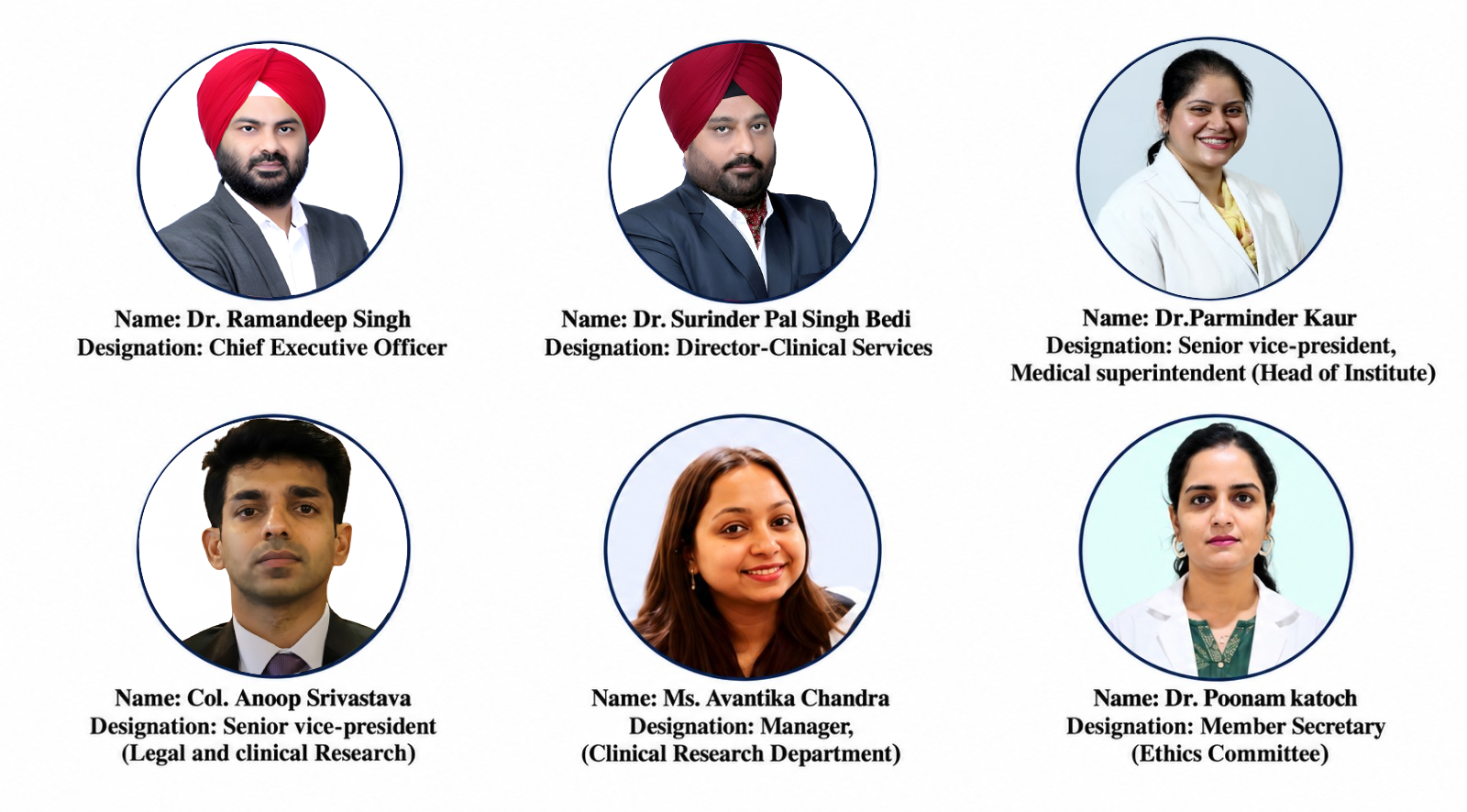
The department functions under the leadership of Dr. Surinder Pal Singh Bedi, Director of Medical Services, and Dr. Parminder Kaur Gill, Senior Vice President & Medical Superintendent (Head of Institute).
The department is headed by Col. Anoop Srivastava, Senior Vice President – Legal & Clinical Research, while Ms. Avantika Chandra, Manager, Clinical Trials Department, oversees the day-to-day coordination and management of clinical research activities and serves as the primary point of contact for all clinical trial-related enquiries and collaborations.
Supported by a team of experienced clinical research professionals with nearly 20 years of expertise and dedicated Pharm.D interns, the department provides comprehensive support for clinical trials and investigator-initiated research, including protocol development, scientific and ethics review, regulatory compliance, data management, and publication assistance.
All research activities are conducted in accordance with NABH, CDSCO, DHR, and ICH-GCP guidelines under the oversight of the hospital's Independent Institutional Ethics Committee, ensuring the highest standards of scientific integrity, regulatory compliance, and patient safety.
OUR LEADERS
What is clinical research/ clinical trial?
Clinical trials are research studies conducted in people to evaluate whether a new medicine, medical device, treatment, or healthcare approach is safe and effective. They are an essential step in developing better treatments and improving patient care. Clinical trials compare new interventions with existing standard treatments to determine if they provide better outcomes or have fewer side effects. Every clinical trial is carefully planned, conducted, monitored, and documented to ensure the rights, safety, and well-being of participants while generating reliable scientific evidence that helps advance medical practice.
What are the phases of a clinical trial?
Clinical trials are conducted in four phases, with each phase designed to answer specific questions about a new medicine, medical device, or treatment. These phases help researchers ensure that the intervention is safe, effective, and suitable for patient use.
- Phase I – Safety and Dosage: Tests a new treatment in a small group of people to make sure it is safe and to find the right dose.
- Phase II – Effectiveness and Safety: Tests the treatment in patients to see how well it works and to continue checking its safety.
- Phase III – Confirmation of Effectiveness: Compares the new treatment with the current standard treatment to confirm that it is safe and effective in a large number of patients.
- Phase IV – Post-Marketing Surveillance: Continues to monitor the treatment after approval to ensure it remains safe and effective in everyday use.
What are the possible benefits and risks of participating in a clinical trial?
Participating in a clinical trial is entirely voluntary. Before joining, participants are informed about the potential benefits and possible risks so they can make an informed decision.
Possible Benefits
- Access to new treatments before they become widely available.
- High-quality medical care and close monitoring by experienced healthcare professionals throughout the study.
- An opportunity to contribute to medical research, helping improve future treatments and patient care.
- Support the development of safer and more effective medicines and medical devices, benefiting society as a whole.
Possible Risks
- The new treatment may cause side effects or unexpected reactions, which may range from mild to serious.
- The treatment may not be more effective than the current standard treatment or may not work for every participant.
- Participation may require additional hospital visits, tests, or follow-up appointments, which can be time-consuming.
- As with any medical research, there may be unknown risks that are not yet fully understood.
All clinical trials are conducted under strict ethical and regulatory guidelines, and participants have the right to withdraw from the study at any time without affecting their routine medical care.
Frequently Asked Questions (FAQs)
1. Can I leave a clinical trial after it has started?
Yes. Participation in a clinical trial is completely voluntary. You are free to withdraw from the study at any time, without giving a reason. Leaving the trial will not affect your regular medical care or your relationship with your treating doctor.
2. Will I be treated like a guinea pig?
No. Clinical trials are conducted under strict ethical and scientific standards to protect the rights, safety, and well-being of all participants. You may undergo some additional tests or study-related procedures, but these are performed under the supervision of qualified healthcare professionals. Every participant receives respectful, ethical, and high-quality medical care throughout the study.
3. How are my safety and privacy protected?
Participant safety is the highest priority in every clinical trial. Each study follows a detailed research protocol that is reviewed and approved by the Drugs Controller General of India (DCGI) and an Independent Ethics Committee (IEC) before it begins. Your personal and medical information is kept confidential and protected in accordance with applicable laws and regulations.
4. What is an Informed Consent Form (ICF)?
The Informed Consent Form (ICF) is a document that explains the purpose, procedures, potential benefits, possible risks, and your rights as a participant. It helps you make an informed decision about joining the study. Before signing the consent form, you will have the opportunity to ask questions and discuss any concerns. The ICF also includes contact details of the Principal Investigator (treating doctor), the Ethics Committee, and the Clinical Research Team. You may withdraw your consent at any time without affecting your routine medical care.
5. What is a placebo?
A placebo is an inactive substance that looks identical to the medicine being studied but does not contain any active ingredients. In some clinical trials, placebos are used to compare the effectiveness and safety of a new treatment with no active treatment. Participants are always informed if a study may involve the use of a placebo.
6. Who regulates clinical trials in India?
Clinical trials in India are regulated by the Central Drugs Standard Control Organization (CDSCO) under the leadership of the Drugs Controller General of India (DCGI). All clinical trials must comply with the New Drugs and Clinical Trials (NDCT) Rules, 2019, along with applicable ethical and regulatory guidelines.
7. How much does it cost to participate in a clinical trial?
Participation in a clinical trial is free of cost. You are not required to pay for study-related medicines, tests, or procedures.
8. Do I need to pay for my treatment during the clinical trial?
Study-related medicines, investigations, and procedures are generally provided at no cost to participants. However, expenses for treatments or tests that are not related to the study may need to be paid by the participant. Some clinical trials may also reimburse travel or other study-related expenses, depending on the study protocol.
9. What happens if I am injured during a clinical trial?
If a participant experiences a clinical trial-related injury or death, compensation and appropriate medical management are provided in accordance with the New Drugs and Clinical Trials (NDCT) Rules, 2019. The safety and welfare of participants remain the highest priority throughout the study.
https://ctri.nic.in/Clinicaltrials/login.php
OUR CLINICAL TRIAL ACCOMPLISHMENT
- Phase 1-4 trials
- BA/BE trials
- Cancer registry
- Investigator initiated trials
- Device trials
- Observational Studies [RWE and Registry]
- Academic studies
- Vaccine trials
OUR CLINICAL RESEARCH EXPERIENCE IN MANY THERAPEUTIC AREAS
- Solid tumors
- Prostate cancer
- COPD
- Asthma
- Urology
- Diabetes
- Cardiology
- Antibiotic compliance
- CKD
- Derma
- Pediatric
- Gastrology
- Neurology
Contact Our Clinical Research Team
Ms. Avantika Chandra
Manager (Clinical Research)